New to the world of miniatures?
What are miniatures?
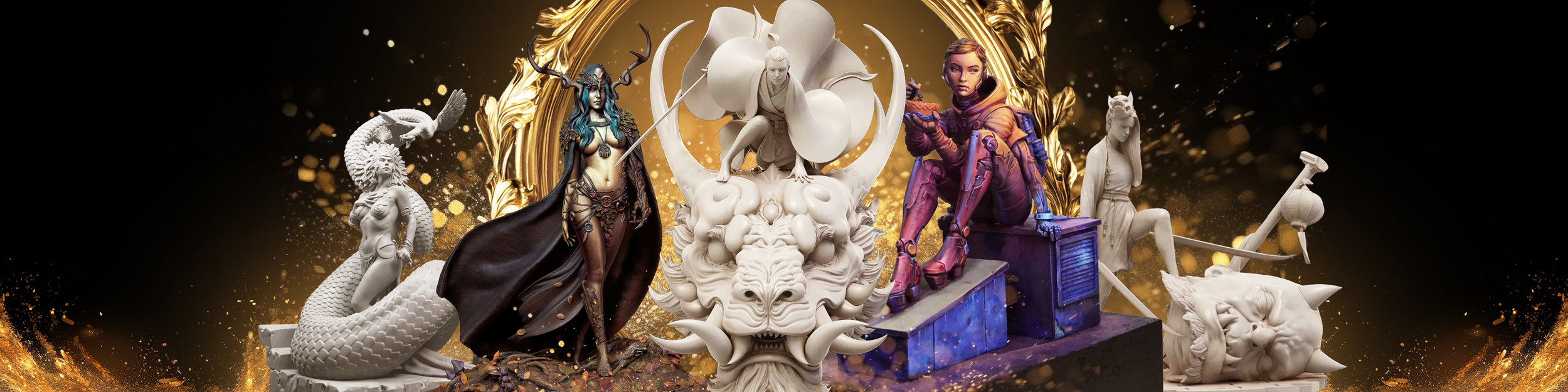
Miniatures are small-scale three-dimensional artworks that depict figures, scenes, or landscapes with a high level of detail and precision. Rooted in historical traditions such as sculpture, painting, and filmmaking, modern miniatures combine artistic skill, technical precision, and narrative design. They might come from different sources: tabletop games, role-playing games, board games, collectibles, self-created artworks, or even fan art tributes.
Today, miniatures are appreciated both as fine art and as a contemporary artistic medium, bridging the gap between classical techniques and modern creative expression.
How are miniatures made?
They are created through the process of art conceptualization, sculpting, casting, assembling components, and painting at reduced scale, allowing artists to explore form, color, light, and storytelling within a compact format.
Usually, the process starts with a concept art, created by an illustrator most of the time. Then a sculptor will make a three-dimensional version of the concept, either by hand using putty or by computer, using a 3D modeling program and 3D printer. Either way, this will result in a master copy.
This master copy is then molded and casted to create more copies that later will be painted by a painter. Sometimes, for unique pieces, the master is directly painted and no copies are made.
Many people today enjoy the hobby of painting miniatures, and these miniatures are created by companies who sell them for either games (war games and board games) or just as paintable collectibles.
What’s so special about them?
Miniatures compress artistic complexity into extreme constraints. Every choice (anatomy, color, texture, light) must work at a fraction of the actual size and obey scale. Light, shadow, and detail are painted to convince the eye it is seeing something larger. This compression magnifies skill: mistakes are obvious, mastery unmistakable.
Miniatures are also distinctive in how they merge disciplines. A single miniature can unite sculpture, painting, composition, historical research, and narrative design in one object. Unlike large-scale art, miniatures require the viewer to slow down, look closely, and actively uncover layers of detail and meaning.
Finally, miniatures create intimacy. Their scale invites a personal, almost private relationship with the viewer, turning observation into exploration. As painted sculptures, they use three-dimensional space to create light effects and hidden details from every angle, rewarding careful, prolonged viewing and requiring a different skill set compared to two-dimensional art such as canvas painting.
The world of contests
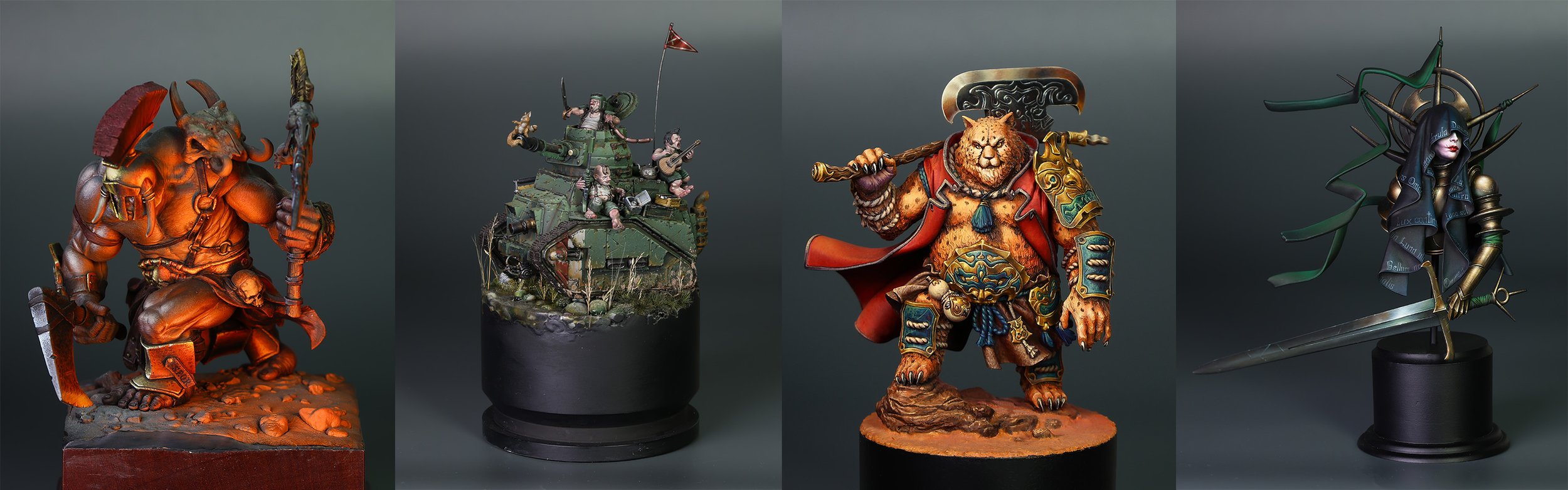
Miniature contests are a central pillar of the miniature world. They set shared standards of excellence, push artists to innovate, and create a global dialogue on technique, storytelling, and artistic quality. Award-winning pieces represent the highest level of this ongoing exchange: works judged by international peers, refined through competition, and recognized for their mastery. In the museum, visitors will see many miniatures that have won major awards worldwide: objects that embody the peak of contemporary miniature art and the competitive culture that drives it forward.
Our History
It all began years ago with “Lord Verko,” Gary Sparks’ character in a long-running Dungeons & Dragons campaign.
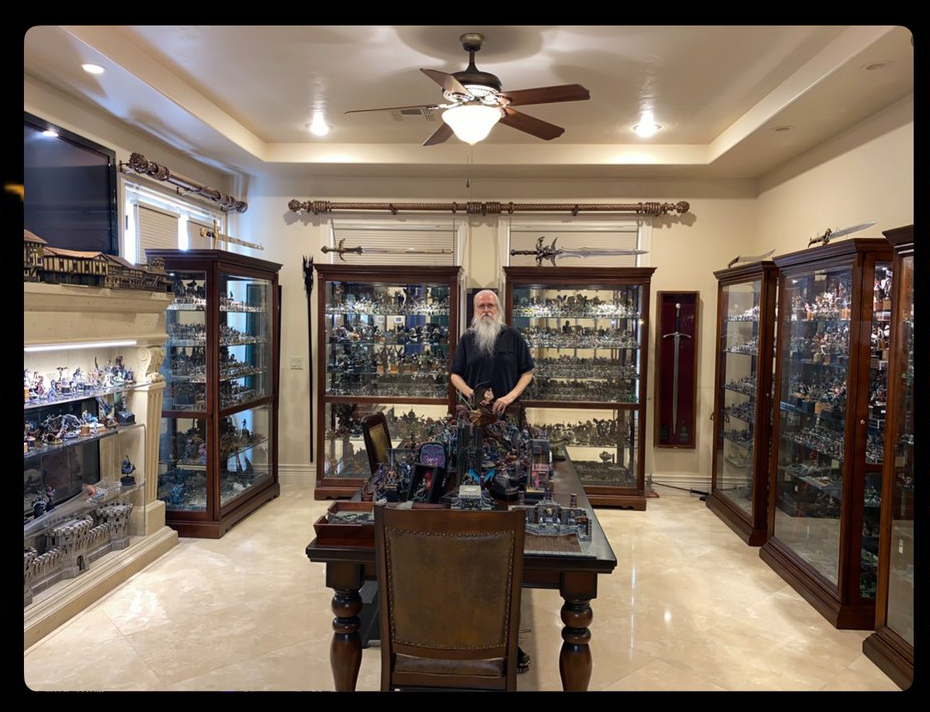
His passion for role-playing led Gary to collect miniatures for his games, and over time they became a central part of his life. Around 2019, the collection reached a turning point: it grew significantly in size and quality, incorporating numerous internationally award-winning works. This period also marked a shift from small-scale gaming figures (around 28 mm) to larger-scale pieces, driven by the acquisition of the Kimera Models and Pegaso Models box art collections. Box art refers to the officially painted version of a commercial figure, used on product packaging to inspire customers and set a benchmark for quality.
Larger-scale miniatures allow for greater artistic expression than traditional gaming pieces. Recognizing their artistic value, Gary envisioned sharing this collection with the public through a museum. The project required acquiring buildings, fully renovating and repurposing them, and relocating a collection of nearly 20,000 pieces to a permanent home. Its scale demanded the creation of a dedicated team and naturally expanded into community-focused activities, including classes, events, and both physical and online shops.